



Rerouting Reality: Drought Turns Panama Canal Into a Strategic Risk
Panama City – June 30, 2025
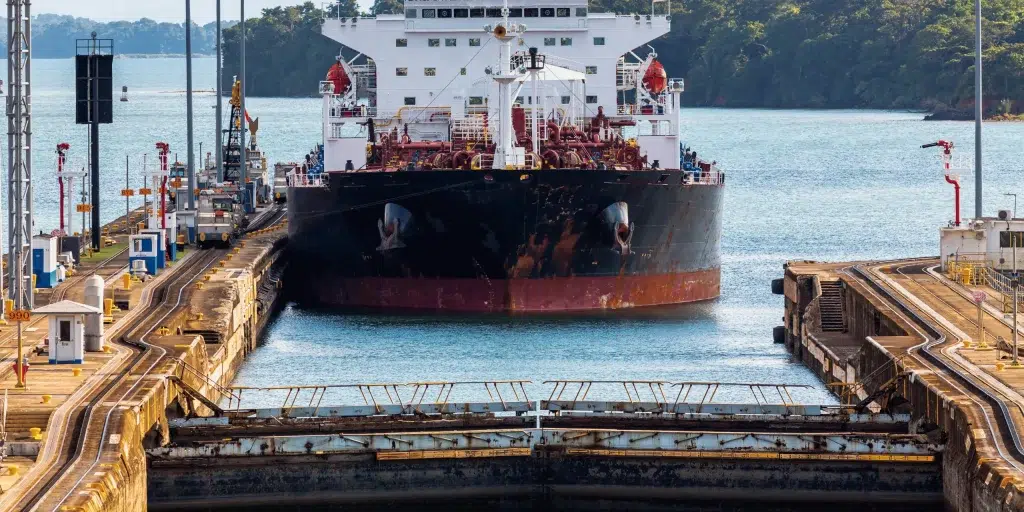
At 6:40 a.m., with the heat already pressing against the steel decks, a bulk carrier idled outside the canal locks, waiting for clearance that might not come today. Or tomorrow.
In Panama, rainfall has been scarce for months. So scarce, in fact, that water levels at Gatun Lake—the canal’s main reservoir—have dropped to the point where large vessels must now compete for access. Not everyone gets through. Fewer slots. Heavier scrutiny. Longer delays.
“We’re not just facing a traffic jam,” said Elisa Romero, who oversees trans-Pacific routes for a Spanish-based freight operator. “We’re seeing the limits of a system that wasn’t designed for climate extremes.”
Shipping Plans Upended
This is not the first time drought has disrupted the Panama Canal. But this time feels different. The canal authority has cut daily transits significantly—forcing shippers to reevaluate routes that once seemed non-negotiable.
Auction prices for time slots have soared. Some carriers are bidding over half a million dollars just to avoid a week-long delay. Others are giving up and rerouting entirely—either around South America or through inland rail systems, though neither option is cheap or quick.
“We’ve added nine days to delivery windows for East Coast U.S. cargo,” said Kazuki Watanabe, who manages operations for a Japanese textile firm. “Clients aren’t happy, but they understand: this isn’t a business decision. It’s nature.”
A Fragile Link in a Fragile Chain
Perishable goods—bananas, avocados, chilled seafood—have been among the hardest hit. Colombian and Ecuadorian exporters are struggling to maintain quality across extended voyages. And storage facilities in nearby ports are already nearing capacity.
In the U.S., downstream effects are just beginning to show: retailers are adjusting stock strategies, and trucking firms are anticipating compressed timelines once goods do arrive.
What Now?
There is no fast fix. Infrastructure projects are underway, but they won’t raise water levels. And with predictions of hotter, drier seasons ahead, the reliability of the canal as a primary artery is now in question.
Some industry observers are calling for a more diversified routing mindset—less dependence on chokepoints, more agile intermodal planning. That shift won’t happen overnight. But it may start with this dry season.
The post Rerouting Reality: Drought Turns Panama Canal Into a Strategic Risk appeared first on The Logistic News.
Share this post

Related
Posts
Record year for Tanger Med as cargo volumes exceed 11 million TEUs and profits climb in 2025
The Tanger Med port complex recorded another year of strong growth in 2025, confirming its position as one of the...

Xeneta warns Middle East conflict could trigger spiraling airfreight rates
Airfreight rates could surge sharply as the Middle East crisis grounds flights and disrupts networks, according to consultant and data...
CHAMP expands Weight & Balance to support Boeing 777-300ERSF freighters
CHAMP Cargosystems has updated its Cargospot Weight & Balance solution to support a broader range of freighter aircraft, including the...

Frankfurt Cargo Services names Thomas Schürmann managing director Germany
SATS-owned Worldwide Flight Services (WFS) has announced Thomas Schürmann will become managing director Germany of its subsidiary Frankfurt Cargo Services...