



Forwarders Brace for Delays and Rising Costs After Iran Strikes
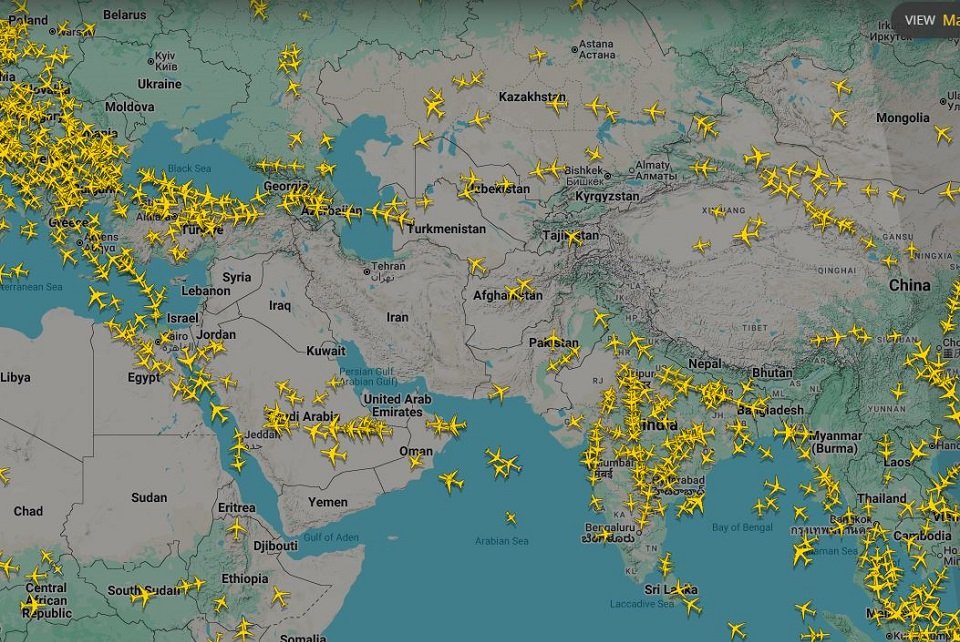
Global freight forwarders are warning customers to prepare for delays, disrupted schedules and rising transport costs following missile strikes involving the United States, Israel and Iran, and the subsequent escalation across the Middle East.
Major operators report that the suspension of air services in the region is already tightening capacity and reshaping network flows. DSV, the world’s largest airfreight forwarder, advised customers to expect extended transit times, irregular schedules and short-notice rate increases.
“As the situation remains uncertain, further adjustments to flight schedules and network coverage may occur at short notice,” the company said in a customer update. Space constraints and cancellations are likely in the coming days and weeks, it warned.
Beyond the immediate regional impact, forwarders anticipate broader consequences as airlines redeploy aircraft, extend routings and suspend selected services. Capacity on the Far East–Europe and Asia–Middle East corridors is expected to tighten significantly.
The pressure is also being compounded by the introduction of war risk surcharges and higher fuel costs. Some forwarders indicated that additional surcharges of around 10% may be applied to offset the increased cost of rerouting flights to avoid high-risk airspace.
However, the current softness in Chinese export volumes — still recovering after the Lunar New Year — may temporarily cushion the impact on rates. Industry sources suggest that if instability persists for several weeks, upward pressure on airfreight pricing from China and other Asian gateways could intensify.
Artemiy Ivanovskiy, general manager at Air Cargo Global Services DWC-LLC, noted that cargo backlogs are already building at Middle Eastern hubs. Inbound shipments that arrived before airspace closures remain in storage, while outbound flows have effectively stalled.
“This has led to an accumulation of shipments, including time-sensitive goods, which are being maintained in controlled storage conditions where possible,” he explained.
Forwarders are responding by securing block space agreements at premiums estimated between 10–20% above previous levels, diversifying carrier options and prioritising urgent cargo. Sea-air solutions are also being reactivated for less time-sensitive freight.
In parallel, companies are advising customers to increase buffer stocks and prepare contingency plans. Measures such as pre-arrival document checks and coordinated customs procedures are being implemented to minimise clearance bottlenecks once operations resume.
The Woodland Group similarly recommended close communication between shippers and logistics providers to assess exposure to affected corridors, including the Gulf region and Red Sea routes. The company cautioned that extended flight times and fuel or war-related surcharges are increasingly likely.
While the duration of the disruption remains unclear, forwarders agree on one point: the current crisis underscores the vulnerability of global supply chains to geopolitical shocks, and resilience planning is no longer optional but essential.
The post Forwarders Brace for Delays and Rising Costs After Iran Strikes appeared first on The Logistic News.
Share this post

Related
Posts

US Truckload Capacity Edges Higher as Major Carriers Rebalance Fleets
The Journal of Commerce’s Truckload Capacity Index (TCI) recorded a slight increase in the fourth quarter, reflecting a cautious expansion...

cargo.one Unveils AI-Native Operating System for Multimodal Freight
Air cargo booking platform cargo.one has announced the launch of what it describes as the industry’s first AI-native operating system...
Forwarders Brace for Delays and Rising Costs After Iran Strikes
Global freight forwarders are warning customers to prepare for delays, disrupted schedules and rising transport costs following missile strikes involving...
Air Cargo Operations Suspended Across the Middle East as Conflict Escalates
Air cargo networks across the Middle East have been severely disrupted following the rapid escalation of military tensions in the...