



Diesel Prices Surge as Middle East Conflict Shakes Energy Markets
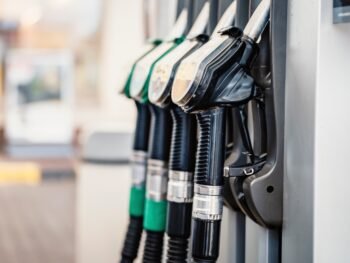
Escalating tensions in the Middle East are sending shockwaves through global energy markets, driving a sharp increase in diesel prices and raising concerns across the logistics sector.
In the United States, the weekly retail diesel price published by the Department of Energy’s Energy Information Administration rose by 8.8 cents per gallon to reach $3.897 per gallon. The benchmark — widely used as the basis for fuel surcharge calculations in freight contracts — has now increased for seven consecutive weeks.
The latest rise brings the benchmark to its highest level since July 2024.
However, analysts warn that the retail market has not yet fully reflected the dramatic surge in diesel futures triggered by the outbreak of hostilities involving Iran.
On the CME commodity exchange, ultra-low sulfur diesel (ULSD) futures for April delivery surged sharply. On Monday, prices settled at $2.9004 per gallon — a jump of more than 30 cents from the previous trading session.
The following day saw even more dramatic gains. ULSD futures climbed another 28.65 cents to settle at $3.1869 per gallon, representing a daily increase of nearly 10 percent. During intraday trading, prices briefly reached $3.3692 per gallon.
The market has risen dramatically since early February, when ULSD traded just below $2.36 per gallon. The latest settlement represents an increase of more than 82 cents in little more than a month.
Retail fuel prices have begun to respond. According to AAA data, the national average diesel price rose from $3.758 per gallon last Friday to $3.891 by Tuesday morning.
Patrick DeHaan, head of petroleum analysis at GasBuddy, noted that some of the largest daily increases in diesel prices historically occurred during periods of geopolitical crisis, including Russia’s invasion of Ukraine in 2022.
Based on current market dynamics, he warned that diesel prices may soon approach the $4 per gallon threshold.
Much of the market anxiety centers on the Strait of Hormuz, one of the most critical maritime chokepoints in global energy supply.
Approximately 20 percent of the world’s oil passes through the narrow waterway connecting the Persian Gulf to international markets. Any disruption to shipping in the region could rapidly tighten global supply.
Iranian officials have already issued threatening statements. One military leader reportedly declared the strait closed, while another warned that vessels attempting to transit the waterway could be targeted.
Even without a formal closure, insurance restrictions and shipping companies’ reluctance to enter the region could effectively disrupt traffic.
The crisis is already affecting oil production in neighboring countries. Reports indicate that Iraq has begun reducing output as storage facilities reach capacity due to difficulties exporting crude.
Energy economist Philip Verleger notes that diesel — rather than crude oil — is currently the most sensitive indicator of tightening fuel markets.
Since the escalation of military tensions, European natural gas prices have climbed as much as 45 percent, European diesel prices have risen 17 percent and U.S. Gulf Coast diesel prices are up roughly 12 percent.
By comparison, crude oil prices have increased by about six percent.
According to Verleger, several structural factors are intensifying the pressure on diesel markets.
U.S. refineries along the Gulf Coast have been supplying large volumes of diesel to Europe, while new European Union sanctions prohibit imports of diesel produced from Russian crude. These restrictions have limited exports from key refining hubs such as India.
“Global diesel markets were already tight,” Verleger wrote. “Now the Iranian attacks are forcing refineries to shut down, tightening supply even further.”
The post Diesel Prices Surge as Middle East Conflict Shakes Energy Markets appeared first on The Logistic News.
Share this post

Related
Posts

Drone attacks disrupt operations at Oman’s major ports
Operations at several major Omani maritime facilities have been disrupted following drone attacks targeting the ports of Duqm and Salalah,...
London marine insurers expand Middle East war-risk zones
Marine insurers in London have expanded the list of high-risk maritime areas in response to escalating hostilities across the Middle...
MSC declares “end of voyage” for Arabian Gulf shipments
Global container shipping leader MSC has declared an “End of Voyage” for all cargo currently bound for ports in the...
UECC strengthens green fleet with two new hybrid car carriers
European vehicle carrier United European Car Carriers (UECC) has confirmed the order of two new multi-fuel battery-hybrid Pure Car and...