



Daimler Truck Suspends Diesel Sales in Oregon Amid Dispute Over Clean Truck Credit Interpretation
By Eva Richardson | The Logistic News
April 14, 2025
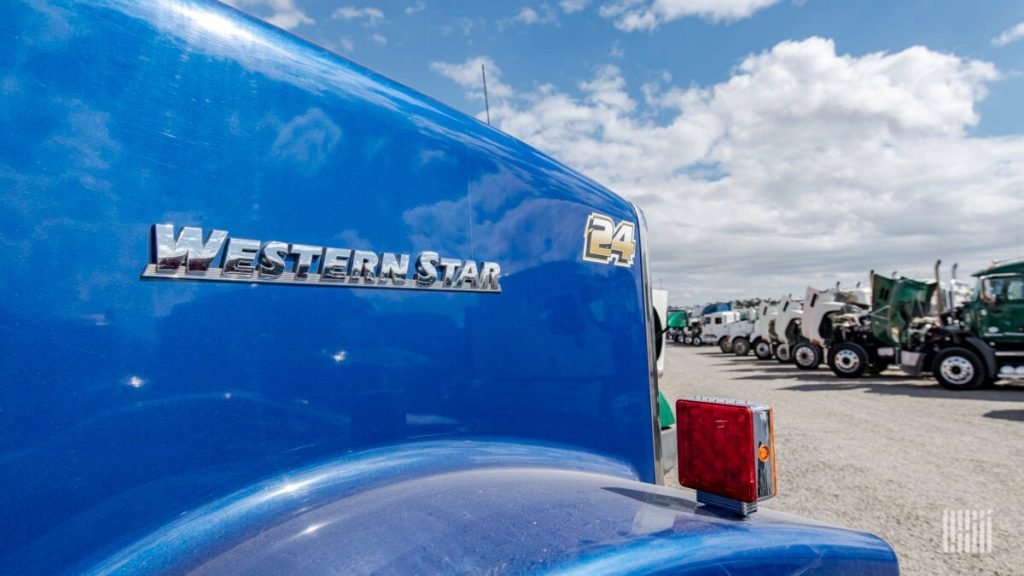
In a rare move that highlights the growing tension between federal ambitions and state-led climate policy, Daimler Truck North America (DTNA) temporarily halted the sale of diesel trucks in Oregon earlier this year, citing regulatory ambiguity related to the state’s adoption of Advanced Clean Trucks (ACT) rules.
While the pause lasted just a few weeks, it has become a case study in how policy misalignment and unclear implementation can disrupt business operations—even for industry giants operating in their home state.
Why Daimler Pulled the Plug—Temporarily
DTNA, which is headquartered in Portland, suspended diesel truck orders in Oregon in late December 2024. The decision stemmed from uncertainty over how Oregon would calculate credit obligations under the ACT program—an environmental rule designed to gradually phase in zero-emission truck sales quotas.
Unlike in California, where vehicle registration is the benchmark for compliance, Oregon’s Department of Environmental Quality (DEQ) initially provided no clear guidance on whether sales vs. registrations would determine manufacturer credit allocations.
“We simply could not risk non-compliance,” a Daimler official said. “Without clarity, continuing diesel sales could have put us in violation of the ACT credit system.”
A Regulatory U-Turn After Industry Pressure
Following industry pushback and extensive dialogue between Daimler and the Oregon DEQ, the state clarified in January 2025 that it would recognize credits based on sales data, aligning its approach more closely with California’s established model.
DTNA quickly resumed diesel sales following the clarification—but not before sending a strong signal about the fragility of regulatory confidence in emerging green policy frameworks.
Implications for the Freight Industry
The incident underscores a larger challenge: as more U.S. states adopt versions of California’s clean truck mandates, consistency and clarity in enforcement become critical. Manufacturers must navigate a patchwork of rules, timelines, and interpretations—each with potentially costly implications.
“Oregon wants to lead on climate,” said one clean freight policy analyst. “But if implementation lacks precision, even green-minded players like Daimler will hesitate.”
DTNA, a major employer in Oregon, had also raised concerns about the economic impact of halting sales in its home market—especially given its role in developing and promoting zero-emission vehicles (ZEVs), including battery-electric and hydrogen-powered trucks.
The Bigger Picture: Navigating the Transition
This episode may serve as a wake-up call for policymakers seeking to accelerate the transition to clean freight. Industry players are not resisting the shift—but they need regulatory stability and mutual understanding to commit long-term resources to innovation, infrastructure, and fleet adaptation.
For Daimler, the resolution came swiftly. But it raises an important precedent: even the most ambitious climate regulations risk unintended fallout if not backed by clear, actionable frameworks.
Eva Richardson is a senior correspondent at The Logistic News, reporting on U.S. transportation policy, clean freight transition strategies, and commercial vehicle regulation.
The post Daimler Truck Suspends Diesel Sales in Oregon Amid Dispute Over Clean Truck Credit Interpretation appeared first on The Logistic News.
Share this post

Related
Posts

Drone attacks disrupt operations at Oman’s major ports
Operations at several major Omani maritime facilities have been disrupted following drone attacks targeting the ports of Duqm and Salalah,...

London marine insurers expand Middle East war-risk zones
Marine insurers in London have expanded the list of high-risk maritime areas in response to escalating hostilities across the Middle...
MSC declares “end of voyage” for Arabian Gulf shipments
Global container shipping leader MSC has declared an “End of Voyage” for all cargo currently bound for ports in the...
UECC strengthens green fleet with two new hybrid car carriers
European vehicle carrier United European Car Carriers (UECC) has confirmed the order of two new multi-fuel battery-hybrid Pure Car and...