



Inside the Warehouse: Why Logistics Software Is Getting Simpler, Not Smarter

By Maria Kalamatas | August 7, 2025
Rotterdam —
At a distribution center on the edge of the Port of Rotterdam, a logistics planner opens her screen at 6:45 AM. Ten shipments are expected today. The software doesn’t give her twenty dashboards. It gives her one sentence: “Three shipments delayed. See port notice.”
That’s it.
And that’s exactly how she wants it.
Across Europe, a quiet shift is taking place in logistics technology. After years of promising to automate everything, digital platforms are being rebuilt around one goal: clarity.
“I don’t need a tool that predicts the future. I need a tool that tells me what to do right now,” says Bram de Vries, logistics coordinator at a Dutch FMCG company.
Backlash against the noise
Not long ago, every new logistics platform came loaded with AI-powered alerts, real-time charts, and endless “smart” suggestions. But for operators on the ground, those tools often created more confusion than confidence.
The problem wasn’t data. It was context.
Many users ended up ignoring the very systems meant to help them. In some warehouses, alerts were muted. In others, reports were printed and handled manually.
That irony hasn’t been lost on developers.
Now, some of the most effective tools being adopted in 2025 don’t promise innovation. They promise peace of mind.
Designed for people, not just platforms
In several updated systems, notifications have been reduced by 70%. Forecasts have been replaced by checklists. And the language has changed — from technical jargon to short, clear messages.
Instead of “ETA variance risk exceeds standard deviation threshold,” users now see:
“Truck will arrive 2 hours late — notify customer?”
And the answer is just a click.
“We’re not building tech for conferences anymore. We’re building it for 5:30 in the morning, in a depot, with bad coffee and a real deadline,” says Elise Bolland, product designer for a logistics tech firm in Belgium.
A return to the essentials
In this new wave of development, less truly is more. Tools that once overwhelmed are being reworked to inform, support, and step aside. Not to lead, but to assist.
It’s not glamorous. But it works.
And for the people who move the world’s goods, that’s what matters.
The post Inside the Warehouse: Why Logistics Software Is Getting Simpler, Not Smarter appeared first on The Logistic News.
Share this post

Related
Posts

Drone attacks disrupt operations at Oman’s major ports
Operations at several major Omani maritime facilities have been disrupted following drone attacks targeting the ports of Duqm and Salalah,...

London marine insurers expand Middle East war-risk zones
Marine insurers in London have expanded the list of high-risk maritime areas in response to escalating hostilities across the Middle...

MSC declares “end of voyage” for Arabian Gulf shipments
Global container shipping leader MSC has declared an “End of Voyage” for all cargo currently bound for ports in the...
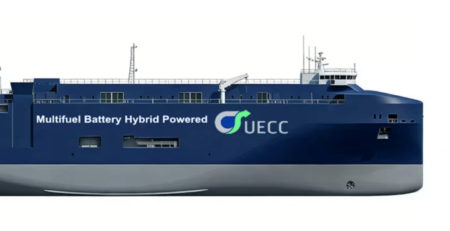
UECC strengthens green fleet with two new hybrid car carriers
European vehicle carrier United European Car Carriers (UECC) has confirmed the order of two new multi-fuel battery-hybrid Pure Car and...