



U.S. Crackdown on Asian Transshipment Shakes Global Trade Routes
By Maria Kalamatas | July 28, 2025
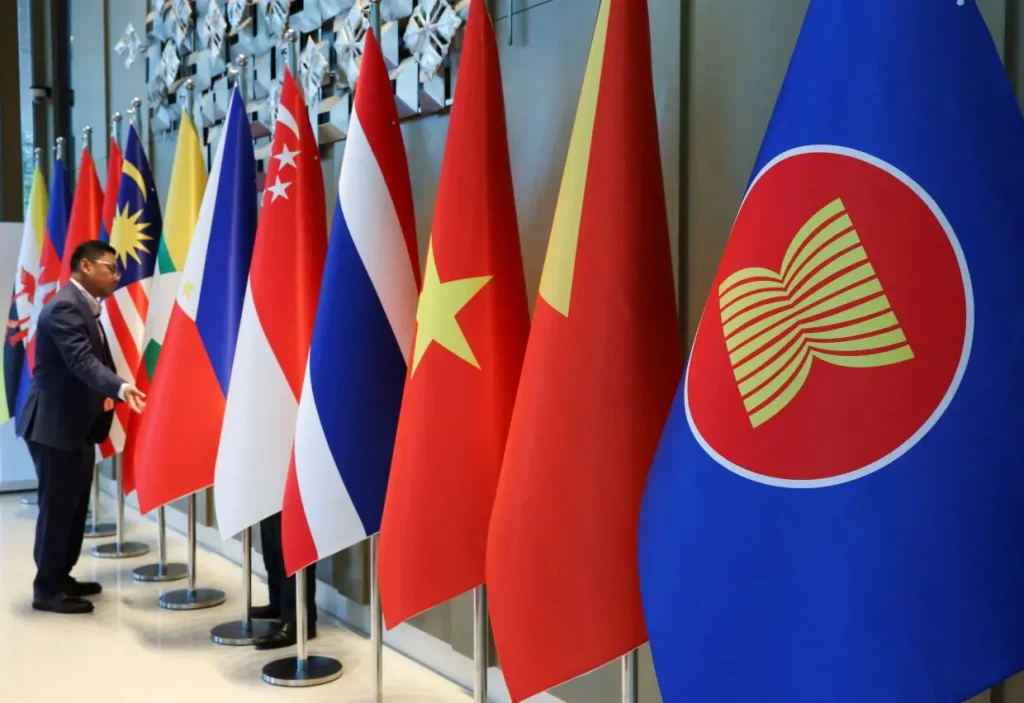
Washington, July 28 — Freight corridors across Asia are facing new turmoil as a U.S. trade order targeting Chinese goods routed through Southeast Asia begins to disrupt supply chains.
“This shift is putting everyone on edge,” said David Han, a Los Angeles–based trade compliance consultant advising several importers. “Forwarders are rewriting entire routing plans because the risk of delays and fines is suddenly real.”
Increased scrutiny on key hubs
The directive, announced last week, tightens customs checks on cargo passing through countries such as Vietnam and Indonesia, which Washington says have become pathways for Chinese exports to bypass tariffs. Industries like consumer electronics and apparel — already under cost pressure — face the heaviest oversight.
Traffic through Ho Chi Minh City and Jakarta, two of Southeast Asia’s busiest transshipment points, has jumped nearly 20 percent since mid-2024. Now, forwarders warn that shipments through these ports could face clearance delays stretching multiple days.
Freight companies weigh costly reroutes
To avoid bottlenecks, some operators are booking direct sailings from Chinese ports to the U.S., even as spot rates climb. Others are sticking to established routes despite mounting paperwork and inspection backlogs.
“For a mid-sized importer, even a 48-hour hold can wipe out profit on a shipment,” Han said. “No one wants to gamble during peak season.”
Global spillover effects
The disruption isn’t staying in Asia. Ports in the Middle East, including Dubai’s Jebel Ali, are preparing for diverted cargo, while Malaysia’s Port Klang braces for heavier volumes as forwarders seek alternative gateways.
Analysts expect door-to-door transit times on key lanes to stretch by three to five days, creating new headaches for retailers relying on just-in-time deliveries ahead of the holiday rush.
A difficult season ahead
Industry groups warn that the timing could not be worse. With holiday inventory already moving, the rerouting scramble may push freight costs higher and force some shippers to cut orders.
“Every extra day in transit matters now,” Han added. “The companies that can pivot quickly will survive — the rest will pay for the delay.”
The post U.S. Crackdown on Asian Transshipment Shakes Global Trade Routes appeared first on The Logistic News.
Share this post

Related
Posts
WFS adapts its strategy in response to cargo disruptions and focuses on multimodal transport.
Worldwide Flight Services is adjusting its operational approach to respond to the rapid transformations in the North American cargo market....
Data and volatility are redefining the pricing mechanisms of global freight.
The pricing of international freight is entering a new phase. According to several players in FreightTech, pricing decisions now rely...

Tidewater strengthens its offshore presence in Brazil with a major acquisition
The offshore services specialist Tidewater is accelerating its development in South America with the acquisition of Wilson Sons Ultratug Offshore,...
Miami International Airport confirms its rise as a major cargo hub in the Americas.
Miami International Airport continues to show positive momentum in the cargo segment, recording a sixth consecutive year of growth. Despite...