



DHL Express Backs Local Innovation with Japan-Made SAF, Opening a New Chapter in Green Air Freight
By Eva Richardson | The Logistic News
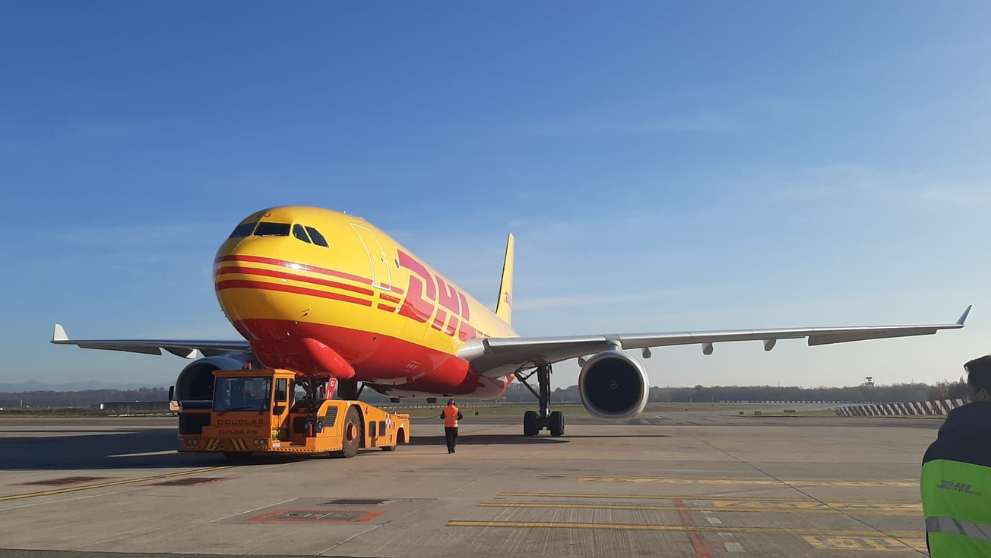
DHL Express has launched a new chapter in its decarbonization strategy — this time, by turning to sustainable aviation fuel (SAF) produced entirely within Japan. In a first for the company’s operations in the country, flights departing from Tokyo Narita are now partially powered by fuel made locally from renewable waste.
This isn’t just another step in DHL’s global climate roadmap. It’s a deliberate shift toward regional action — the kind that aligns environmental ambition with local innovation.
The program, now underway at Narita Airport, signals a clear departure from conventional SAF models that often rely on global supply chains. Here, the fuel is made, refined, and used in the same country. That alone makes the initiative stand out.
“We have ambitious carbon reduction goals, yes — but to reach them, we need to localize our solutions,” said a senior executive at DHL Express Japan. “By sourcing SAF here, we’re not only cutting our own emissions but also contributing to the growth of Japan’s clean fuel ecosystem.”
The SAF used in Japan is made from waste oils and other organic materials. According to lifecycle analysis, it can reduce CO₂ emissions by up to 80% compared to standard jet fuel. While the volume in use today remains modest, its symbolic weight — and operational potential — are significant.
The move comes at a time when the aviation industry is under pressure to decarbonize, and when Japan is positioning itself as a regional leader in renewable fuels. DHL’s partnership with Japanese SAF producers reflects a new kind of strategy — one that’s as much about strengthening supply networks as it is about cutting emissions.
Globally, DHL has committed to using at least 30% SAF across its air transport operations by 2030. But reaching that goal will depend heavily on regional adoption — and this initiative in Japan is already showing what that future might look like.
At Narita, it starts small. But the message is bigger than the metric tons: true sustainability isn’t imported. It’s built — airport by airport, flight by flight, and region by region.
DHL Express, it seems, is already on that runway.
The post DHL Express Backs Local Innovation with Japan-Made SAF, Opening a New Chapter in Green Air Freight appeared first on The Logistic News.
Share this post

Related
Posts

European Cargo to launch China–Teesside freighter services
European Cargo has announced plans to launch five weekly freighter services between China and Teesside International Airport while establishing a...
Kuehne+Nagel retains top airfreight ranking despite DSV–Schenker deal
Kuehne+Nagel (K+N) has maintained its position as the world’s largest airfreight forwarder by volume, despite DSV’s acquisition of DB Schenker...
Air cargo tackles backlogs as Middle East capacity crunch deepens
Air cargo operators continue to grapple with the fallout from escalating Middle East conflict, as airspace closures, route suspensions and...
Global energy crisis looms as Arabian Gulf exports halt
Qatar has halted LNG production at Ras Laffan, one of the world’s largest liquefied natural gas production and export terminals,...