



Containers Wait, and So Does the Industry: A Quiet Return of Port Slowdowns

By Maria Kalamatas | May 15, 2025
Los Angeles —
The cranes are moving. The lights are on. But the containers aren’t going anywhere.
At first glance, everything looks fine at the ports of Southern California. Ships dock. Trucks arrive. Schedules hold—mostly.
But if you talk to people behind the scenes, you’ll hear a different story.
“Everything is a little slower,” said a supervisor managing outbound cargo. “Not broken. Just… off.”
After two years of relative calm, some pressure is creeping back in. Not from one big event. No strikes. No pandemics. Just friction. Timing misalignments. A storm that pushed arrivals into a narrow window. A chassis shortfall that no one planned for. A rail delay that rippled through a warehouse calendar.
And the containers? They wait.
Not weeks—days. But days add up.
Shippers who rely on tight turnarounds—especially in fashion, food, and electronics—are starting to feel the squeeze. Deliveries arrive close to deadline. Restocks miss weekend sales. Some importers are rethinking buffer zones that had been trimmed back last year.
This isn’t panic. But it’s pressure.
At one inland distribution center, a manager described it simply: “It’s not the traffic jam. It’s the hesitation.”
Some freight companies are quietly adding more yard time into their estimates. Others are urging clients to stagger inbound volumes or use secondary ports—even at higher cost.
The bigger fear? That a minor slowdown becomes a habit. That flexibility, once gained post-COVID, erodes quietly under the weight of old routines.
Everyone remembers what it looked like when things stopped moving. No one wants that again.
But today, the risk isn’t catastrophe. It’s complacency.
The post Containers Wait, and So Does the Industry: A Quiet Return of Port Slowdowns appeared first on The Logistic News.
Share this post

Related
Posts

European Cargo to launch China–Teesside freighter services
European Cargo has announced plans to launch five weekly freighter services between China and Teesside International Airport while establishing a...
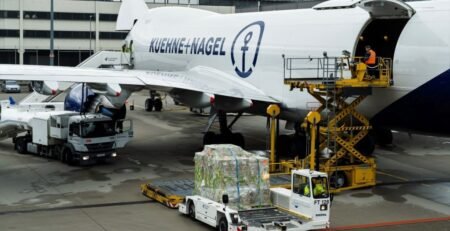
Kuehne+Nagel retains top airfreight ranking despite DSV–Schenker deal
Kuehne+Nagel (K+N) has maintained its position as the world’s largest airfreight forwarder by volume, despite DSV’s acquisition of DB Schenker...
Air cargo tackles backlogs as Middle East capacity crunch deepens
Air cargo operators continue to grapple with the fallout from escalating Middle East conflict, as airspace closures, route suspensions and...

Global energy crisis looms as Arabian Gulf exports halt
Qatar has halted LNG production at Ras Laffan, one of the world’s largest liquefied natural gas production and export terminals,...