



Recycled Plastic Bottlenecks Disrupt Global Packaging Networks
By Maria Kalamatas | July 29, 2025
Berlin, July 29 — On a gray Tuesday morning, forklifts sit idle at GreenPak Industries, one of Europe’s largest packaging suppliers. The usual stacks of recycled plastic pellets — crucial for producing bottles and food containers — are nowhere to be seen. For Petra Hoffmann, who oversees operations here, each empty pallet means another contract at risk.
“We’re cutting production by the hour,” Hoffmann said, glancing at a half-full warehouse. “Clients want sustainable packaging, regulators demand it, but we can’t make product without raw material. And right now, the material just isn’t arriving.”
A global shortage builds pressure
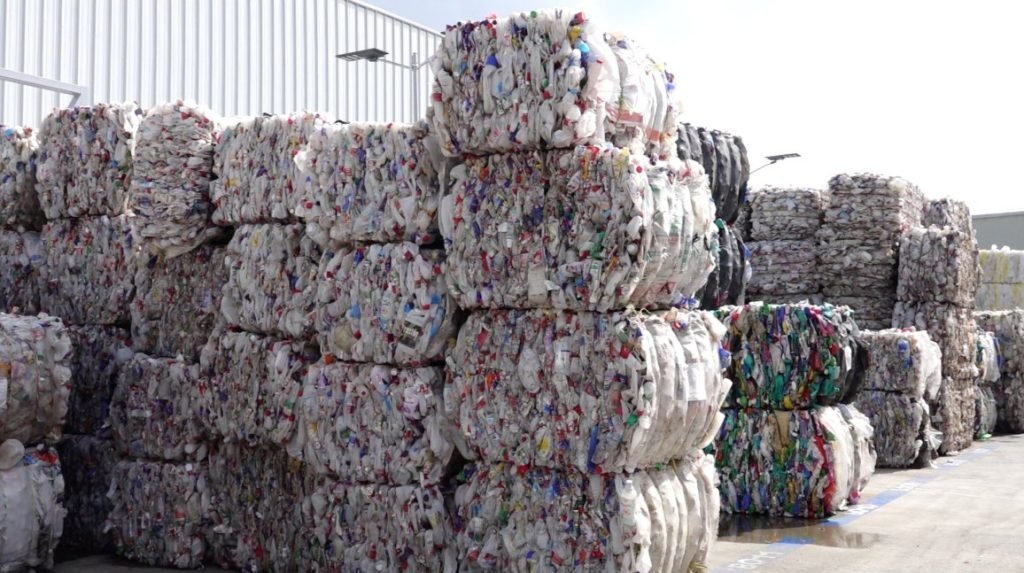
The scarcity isn’t confined to Berlin. Recycled plastic supplies are drying up worldwide as collection rates fall in Asia, where economic slowdowns have cut municipal recycling efforts, and demand surges in Europe and the U.S. from brands racing to hit environmental targets.
Recent strikes at Southeast Asian ports, key export points for processed pellets, have compounded the crisis. Traders say prices for high-grade recycled plastics have jumped nearly 20 percent in the past month, with delivery windows now stretching to six or even eight weeks.
Manufacturers scramble for solutions
Major consumer brands, from beverage companies to household product makers, are struggling to keep plants running. Some are sourcing virgin plastic despite penalties under EU environmental rules, while others are delaying product launches to preserve limited recycled stock.
Logistics firms report a sharp uptick in emergency airfreight bookings for recycled pellets — a costly move, but one many see as the only way to avoid factory shutdowns.
Shifting routes, pooling resources
Recycling processors and forwarders are rerouting cargo through Middle Eastern and Mediterranean ports to bypass the worst bottlenecks. Meanwhile, several European packaging manufacturers are negotiating joint procurement agreements, pooling orders to secure priority shipping and stabilize supply.
The road ahead for Q4
Analysts warn that, unless recycling rates rebound and shipping networks normalize, these shortages could persist into the peak holiday production season. That would not only raise costs for manufacturers but also threaten retail prices for consumers.
“For us, it’s not just a supply chain issue,” Hoffmann said, her voice low as machines on the line slowed to a crawl. “It’s about proving we can deliver sustainable packaging without breaking our promises — or going under.”
The post Recycled Plastic Bottlenecks Disrupt Global Packaging Networks appeared first on The Logistic News.
Share this post

Related
Posts

European Cargo to launch China–Teesside freighter services
European Cargo has announced plans to launch five weekly freighter services between China and Teesside International Airport while establishing a...

Kuehne+Nagel retains top airfreight ranking despite DSV–Schenker deal
Kuehne+Nagel (K+N) has maintained its position as the world’s largest airfreight forwarder by volume, despite DSV’s acquisition of DB Schenker...

Air cargo tackles backlogs as Middle East capacity crunch deepens
Air cargo operators continue to grapple with the fallout from escalating Middle East conflict, as airspace closures, route suspensions and...

Global energy crisis looms as Arabian Gulf exports halt
Qatar has halted LNG production at Ras Laffan, one of the world’s largest liquefied natural gas production and export terminals,...