



Global freight and tariff pressures challenge logistics networks.
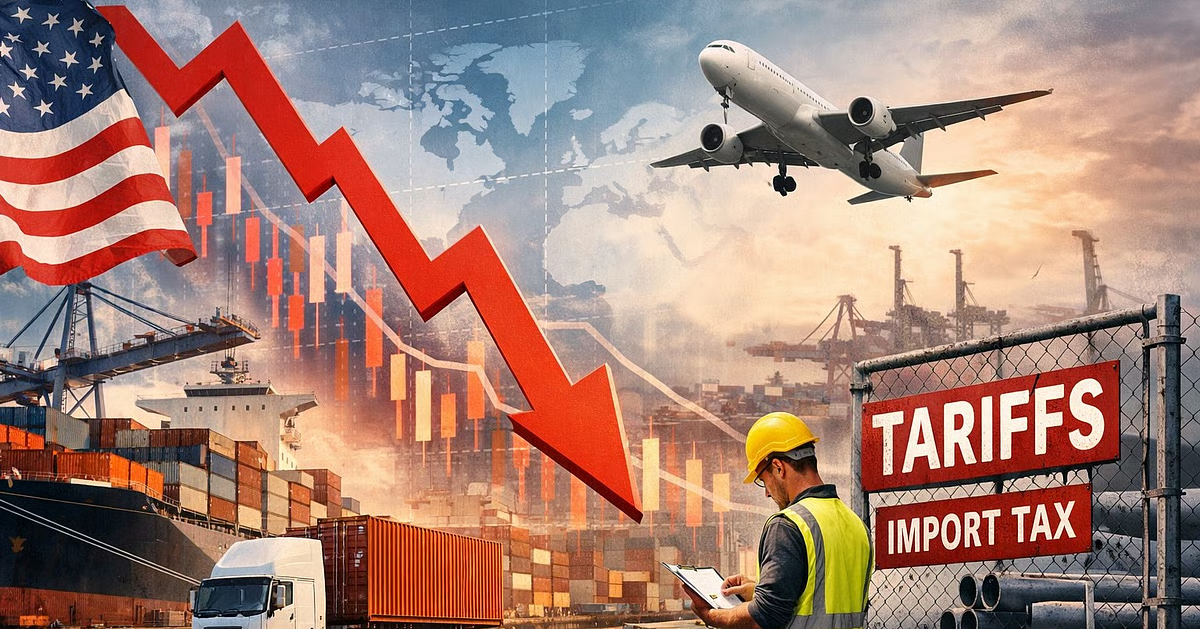
In a context of persistently tight logistics markets, international freight players are facing a confluence of tariff pressures, network restructurings, and operational disruptions. On one hand, companies like UPS are reorganizing their operations in response to a decline in traditional parcel volumes, particularly related to their former contract with Amazon. On the other hand, tariff policies and trade negotiations continue to influence routing choices and priority destinations for air and sea freight.
For example, customs tariff adjustments in Eurasia and potential free trade agreements are changing trade dynamics, while carriers and maritime operators are dealing with challenges of service punctuality and unconventional transit practices such as “dark fleet” transfers. These combined dynamics highlight a trend where predictability becomes a key criterion for shippers, who demand greater tariff clarity, reliable services, and adaptive operational plans in an uncertain global environment.
The post Global freight and tariff pressures challenge logistics networks. appeared first on The Logistic News.
Share this post

Related
Posts

European Cargo to launch China–Teesside freighter services
European Cargo has announced plans to launch five weekly freighter services between China and Teesside International Airport while establishing a...
Kuehne+Nagel retains top airfreight ranking despite DSV–Schenker deal
Kuehne+Nagel (K+N) has maintained its position as the world’s largest airfreight forwarder by volume, despite DSV’s acquisition of DB Schenker...

Air cargo tackles backlogs as Middle East capacity crunch deepens
Air cargo operators continue to grapple with the fallout from escalating Middle East conflict, as airspace closures, route suspensions and...

Global energy crisis looms as Arabian Gulf exports halt
Qatar has halted LNG production at Ras Laffan, one of the world’s largest liquefied natural gas production and export terminals,...