



Maersk Unveils AI-Powered Port Delay Forecasting Tool for Global Clients
By Maria Kalamatas
Copenhagen, DENMARK —
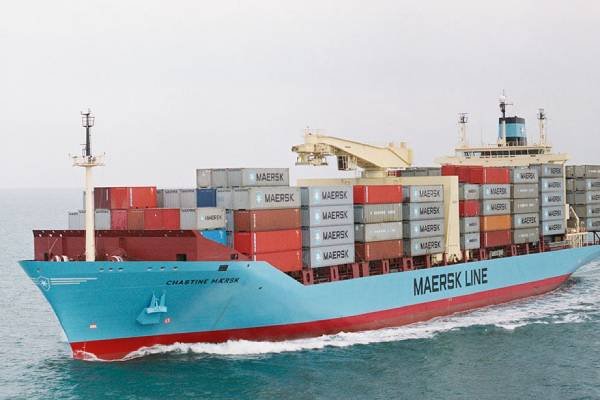
Shipping giant A.P. Moller–Maersk has announced the global launch of a predictive AI platform designed to anticipate port delays up to seven days in advance, potentially redefining how shippers and freight forwarders manage disruption risk in volatile trade lanes.
The tool, called PortSight, uses real-time satellite data, weather models, historical congestion trends, and vessel positioning to produce dynamic forecasts for more than 300 major ports worldwide. It was developed in partnership with NVIDIA and MIT’s Center for Transportation & Logistics.
“This is about turning data into foresight,” said Mads Skovlund, Maersk’s Chief Digital Product Officer. “When your cargo is moving across multiple jurisdictions and weather systems, even a 12-hour heads-up on port congestion can save tens of thousands of dollars.”
From visibility to predictability
Logistics executives say the tool could shift the industry from reactive troubleshooting to proactive rerouting. PortSight integrates directly into Maersk’s client dashboard and provides actionable risk flags such as “anchorage congestion risk >70%” or “labor disruption index: high.”
“Traditional tracking tells you where your shipment is. PortSight tells you what could happen next,” said Jamie Leone, Director of Global Freight at Baxter International, one of Maersk’s beta clients.
Early wins: Rotterdam and Singapore
In Q1 pilot runs at Port of Rotterdam and Port of Singapore, PortSight correctly predicted slowdowns due to equipment shortages and labor absences five days ahead—allowing shippers to redirect cargo or adjust inventory planning.
According to Maersk internal reporting, customers using the platform reduced demurrage costs by 22% on average over a three-month period.
Broader tech strategy: predictive logistics at scale
The launch is part of Maersk’s $750 million investment in advanced logistics technologies through 2027. Other initiatives in the pipeline include automated exception handling in customs clearance and predictive container maintenance alerts.
“This is not about gimmicks. It’s about staying competitive,” said Skovlund. “Clients want fewer surprises. AI helps us deliver that.”
A new frontier in trust
Beyond the numbers, experts say tools like PortSight may help rebuild trust in global supply chains after years of pandemic- and war-related disruption.
“When companies can plan better, they commit better. It’s a stability multiplier,” noted Prof. Emilie Zhang, who consulted on the project at MIT.
The post Maersk Unveils AI-Powered Port Delay Forecasting Tool for Global Clients appeared first on The Logistic News.
Share this post

Related
Posts

European Cargo to launch China–Teesside freighter services
European Cargo has announced plans to launch five weekly freighter services between China and Teesside International Airport while establishing a...
Kuehne+Nagel retains top airfreight ranking despite DSV–Schenker deal
Kuehne+Nagel (K+N) has maintained its position as the world’s largest airfreight forwarder by volume, despite DSV’s acquisition of DB Schenker...

Air cargo tackles backlogs as Middle East capacity crunch deepens
Air cargo operators continue to grapple with the fallout from escalating Middle East conflict, as airspace closures, route suspensions and...
Global energy crisis looms as Arabian Gulf exports halt
Qatar has halted LNG production at Ras Laffan, one of the world’s largest liquefied natural gas production and export terminals,...